
Boiler Repair Oxford: Noises, Lockouts and Pressure Drops Homeowners Should Track
A boiler does not always fail suddenly. In many homes, problems develop gradually through unusual noises, occasional lockouts, pressure changes or heating that no longer feels as consistent as it once did.

Why you can trust our content
We understand that the boiler industry can be confusing, with plenty of outdated or misleading information. That’s why we rely only on trusted, proven sources to guide our advice and installations:

At a glance
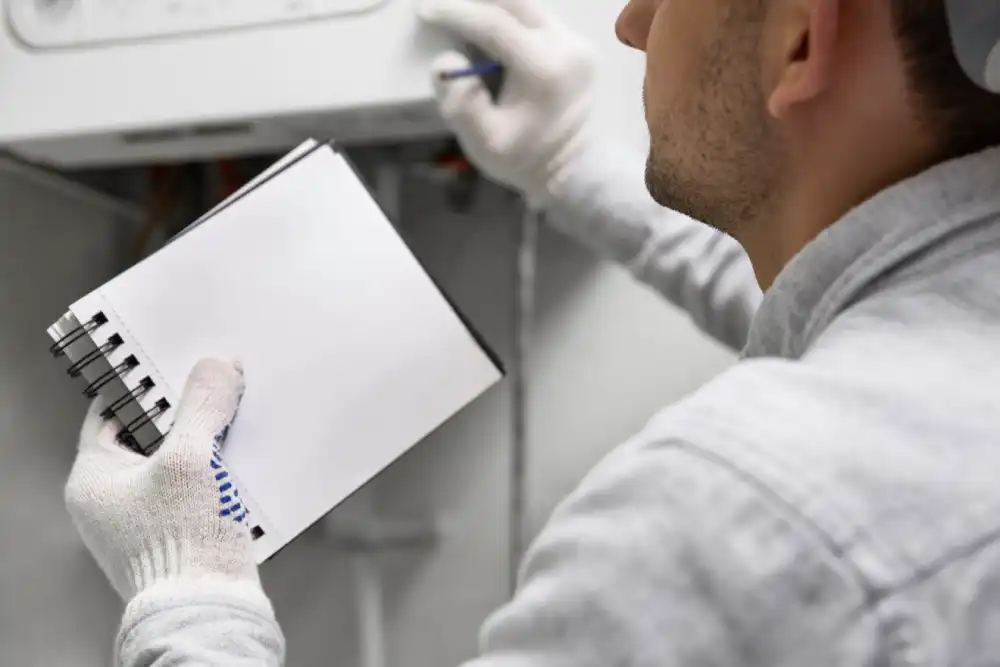
These symptoms are easy to dismiss when the boiler eventually starts working again. However, keeping track of what happens can give an engineer valuable information and may help identify a developing fault before it becomes a more serious breakdown.
For homeowners looking for boiler repair oxford, knowing what to monitor can also help you explain the problem clearly when arranging an assessment.
If your boiler has started behaving differently, JA Plumbing & Heating can investigate the symptoms and explain whether a repair is appropriate or whether further work should be considered.
Which boiler symptoms should homeowners record?
You do not need to diagnose a boiler fault yourself. Your role is simply to notice changes and record useful details.
Keep track of:
- Unusual noises
- Error codes
- Boiler lockouts
- Pressure changes
- Heating interruptions
- Hot water problems
- Radiators taking longer to warm
- Repeated resets
- Changes in boiler operating patterns
The timing of a fault can also be useful.
For example, does the boiler cut out when the heating starts, when hot water is being used or after it has been running for a while?
These details can help an engineer understand the conditions under which the problem occurs.
What do different boiler noises mean?
Boilers can make some normal operating sounds, but a new or unusually loud noise should be investigated.
| Noise | Possible reason | What to do |
| Banging | Circulation or heat exchanger issue | Arrange an assessment |
| Whistling | Water flow or component issue | Have the source checked |
| Gurgling | Air or trapped water | Check the heating system |
| Humming | Pump or electrical component | Arrange inspection |
| Clicking | Ignition or control issue | Have the boiler assessed |
The sound itself does not provide a diagnosis.
For example, a banging noise could have several possible causes, some of which may be relatively straightforward to address.
Avoid repeatedly ignoring a new noise simply because the heating still works. A change in sound can be an early indication that something within the system needs attention.
Why does a boiler keep locking out?
A lockout occurs when the boiler shuts itself down because its controls detect a problem that prevents normal operation.
Possible causes include:
- Low system pressure
- Ignition faults
- Sensor problems
- Overheating
- Poor circulation
- Gas supply issues
- Flue-related problems
- Component faults
The boiler may display an error code, depending on the model.
If the boiler locks out once, the cause may be relatively simple. If it happens repeatedly, the pattern should be investigated.
Repeatedly resetting the boiler without identifying the reason can allow the underlying problem to continue.
A qualified engineer carrying out boiler repair can investigate the cause and determine whether the appliance can be safely returned to reliable operation.
Let’s get started, Which fuel powers your boiler?
It just takes 60 Sec
And then you can book a free consultation
What does falling boiler pressure indicate?
Many sealed central heating systems operate within a normal pressure range. If pressure repeatedly falls, something may need attention.
Possible causes include:
- A leak within the heating system
- A problem with the expansion vessel
- A faulty pressure relief valve
- Air entering or escaping from the system
- A component that is not maintaining pressure correctly
Homeowners should not assume that repeatedly topping up the pressure has fixed the problem.
If pressure drops frequently, the underlying cause should be investigated.
This is particularly important when pressure loss occurs alongside boiler lockouts or poor heating performance.
How often should boiler pressure be checked?
There is no need to constantly monitor the pressure gauge. However, homeowners should become familiar with what is normal for their system.
If you notice that the pressure is repeatedly falling or changing significantly, make a note of when it happens.
For example:
Monday: Pressure appears normal.
Thursday: Boiler locks out and pressure is low.
Friday: Pressure is restored but falls again after heating is used.
A simple record like this can be more useful to an engineer than saying that the pressure “sometimes drops”.
It provides a timeline that may help identify a recurring pattern.
Can poor heating performance indicate a boiler fault?
Yes, although the boiler is not always responsible.
If rooms that normally heat quickly are taking much longer to reach temperature, several causes are possible.
These can include:
- Boiler performance problems
- Poor circulation
- Air in radiators
- Unbalanced radiators
- Faulty controls
- Restricted pipework
- Radiator issues
This is why a proper assessment should consider the whole heating system.
A new boiler may not solve a problem that actually originates elsewhere.
If your heating has become less reliable or your boiler is repeatedly locking out, contact JA Plumbing & Heating for professional assessment before the problem worsens.
When should you arrange boiler repair?
It is sensible to arrange an assessment when a fault is recurring rather than waiting for a complete breakdown.
Consider booking an inspection if you notice:
- Repeated lockouts
- New or worsening noises
- Frequent pressure loss
- Unreliable hot water
- Heating that cuts out
- Error codes
- Increasingly frequent resets
- Unusual boiler behaviour
Early attention may allow a relatively straightforward issue to be addressed before additional components become affected.
For homeowners searching for boiler repair oxford, choosing a qualified professional is important because gas appliances and heating systems need to be assessed and repaired safely.
What information should you give the engineer?
The more clearly you can describe the problem, the easier it may be to investigate.
Useful information includes:
- The exact symptom
- When it usually occurs
- How frequently it happens
- Any displayed error code
- Boiler pressure at the time
- Whether heating or hot water is affected
- Whether resetting temporarily resolves it
- Any recent repairs
- Any unusual noises
If possible, take a photograph of an error code or pressure gauge when the problem occurs.
Do not attempt to dismantle the boiler or carry out internal repairs yourself.
A typical Oxford boiler repair scenario
Consider a homeowner whose boiler occasionally locks out during colder mornings.
Initially, the problem happens only once every few weeks. The homeowner resets the appliance and continues using it.
Over several months, the lockouts become more frequent. The boiler also begins making a humming noise and the pressure starts dropping.
When the homeowner finally arranges an inspection, the engineer has several symptoms to investigate rather than one isolated fault.
The combination of repeated lockouts, noise and pressure loss may point towards a broader issue requiring more detailed assessment.
This example shows why keeping a record can be useful. The progression of symptoms may help the engineer understand how the problem has developed.
Is repair always better than replacement?
No.
Repair may be sensible when the appliance is in good condition and the fault is relatively straightforward.
Replacement may become more attractive when the boiler is ageing and has developed multiple recurring problems.
Factors to consider include:
| Factor | Repair may suit | Replacement may suit |
| Boiler age | Relatively modern | Older appliance |
| Fault history | Isolated fault | Repeated breakdowns |
| Repair cost | Manageable | Increasing |
| Reliability | Generally dependable | Declining |
| Parts | Available | Becoming difficult to source |
| Performance | Mostly consistent | Multiple ongoing issues |
A professional assessment can help you compare the options without assuming that every boiler problem requires a new appliance.
How can homeowners reduce the risk of major boiler problems?
Regular servicing and prompt attention to unusual changes can help identify faults earlier.
Homeowners can also:
- Keep records of repairs
- Note repeated error codes
- Pay attention to pressure changes
- Avoid repeatedly resetting the boiler
- Report new noises
- Have persistent hot water problems investigated
- Follow manufacturer servicing recommendations
A boiler does not need to be completely broken before it deserves attention.
If you are noticing repeated boiler faults, speak to JA Plumbing & Heating. Our team can assess the symptoms and help you understand whether repair or replacement is the more appropriate next step.
Final Thoughts
Boiler noises, lockouts and pressure drops are useful performance clues. They do not always mean that a boiler needs replacing, but recurring symptoms should not be ignored.
Keeping a simple record of what happens, when it happens and how often it occurs can help an engineer investigate the problem more efficiently.
For homeowners considering boiler repair oxford, JA Plumbing & Heating can assess the symptoms and explain whether repair remains practical or whether replacement should be considered. Professional diagnosis can help prevent small problems from becoming more disruptive and expensive.
Related articles
Let’s get started, Which fuel powers your boiler?
At a glance
These symptoms are easy to dismiss when the boiler eventually starts working again. However, keeping track of what happens can give an engineer valuable information and may help identify a developing fault before it becomes a more serious breakdown.
For homeowners looking for boiler repair oxford, knowing what to monitor can also help you explain the problem clearly when arranging an assessment.
If your boiler has started behaving differently, JA Plumbing & Heating can investigate the symptoms and explain whether a repair is appropriate or whether further work should be considered.
Which boiler symptoms should homeowners record?
You do not need to diagnose a boiler fault yourself. Your role is simply to notice changes and record useful details.
Keep track of:
- Unusual noises
- Error codes
- Boiler lockouts
- Pressure changes
- Heating interruptions
- Hot water problems
- Radiators taking longer to warm
- Repeated resets
- Changes in boiler operating patterns
The timing of a fault can also be useful.
For example, does the boiler cut out when the heating starts, when hot water is being used or after it has been running for a while?
These details can help an engineer understand the conditions under which the problem occurs.
What do different boiler noises mean?
Boilers can make some normal operating sounds, but a new or unusually loud noise should be investigated.
| Noise | Possible reason | What to do |
| Banging | Circulation or heat exchanger issue | Arrange an assessment |
| Whistling | Water flow or component issue | Have the source checked |
| Gurgling | Air or trapped water | Check the heating system |
| Humming | Pump or electrical component | Arrange inspection |
| Clicking | Ignition or control issue | Have the boiler assessed |
The sound itself does not provide a diagnosis.
For example, a banging noise could have several possible causes, some of which may be relatively straightforward to address.
Avoid repeatedly ignoring a new noise simply because the heating still works. A change in sound can be an early indication that something within the system needs attention.
Why does a boiler keep locking out?
A lockout occurs when the boiler shuts itself down because its controls detect a problem that prevents normal operation.
Possible causes include:
- Low system pressure
- Ignition faults
- Sensor problems
- Overheating
- Poor circulation
- Gas supply issues
- Flue-related problems
- Component faults
The boiler may display an error code, depending on the model.
If the boiler locks out once, the cause may be relatively simple. If it happens repeatedly, the pattern should be investigated.
Repeatedly resetting the boiler without identifying the reason can allow the underlying problem to continue.
A qualified engineer carrying out boiler repair can investigate the cause and determine whether the appliance can be safely returned to reliable operation.
Let’s get started, Which fuel powers your boiler?
It just takes 60 Sec
And then you can book a free consultation
What does falling boiler pressure indicate?
Many sealed central heating systems operate within a normal pressure range. If pressure repeatedly falls, something may need attention.
Possible causes include:
- A leak within the heating system
- A problem with the expansion vessel
- A faulty pressure relief valve
- Air entering or escaping from the system
- A component that is not maintaining pressure correctly
Homeowners should not assume that repeatedly topping up the pressure has fixed the problem.
If pressure drops frequently, the underlying cause should be investigated.
This is particularly important when pressure loss occurs alongside boiler lockouts or poor heating performance.
How often should boiler pressure be checked?
There is no need to constantly monitor the pressure gauge. However, homeowners should become familiar with what is normal for their system.
If you notice that the pressure is repeatedly falling or changing significantly, make a note of when it happens.
For example:
Monday: Pressure appears normal.
Thursday: Boiler locks out and pressure is low.
Friday: Pressure is restored but falls again after heating is used.
A simple record like this can be more useful to an engineer than saying that the pressure “sometimes drops”.
It provides a timeline that may help identify a recurring pattern.
Can poor heating performance indicate a boiler fault?
Yes, although the boiler is not always responsible.
If rooms that normally heat quickly are taking much longer to reach temperature, several causes are possible.
These can include:
- Boiler performance problems
- Poor circulation
- Air in radiators
- Unbalanced radiators
- Faulty controls
- Restricted pipework
- Radiator issues
This is why a proper assessment should consider the whole heating system.
A new boiler may not solve a problem that actually originates elsewhere.
If your heating has become less reliable or your boiler is repeatedly locking out, contact JA Plumbing & Heating for professional assessment before the problem worsens.
When should you arrange boiler repair?
It is sensible to arrange an assessment when a fault is recurring rather than waiting for a complete breakdown.
Consider booking an inspection if you notice:
- Repeated lockouts
- New or worsening noises
- Frequent pressure loss
- Unreliable hot water
- Heating that cuts out
- Error codes
- Increasingly frequent resets
- Unusual boiler behaviour
Early attention may allow a relatively straightforward issue to be addressed before additional components become affected.
For homeowners searching for boiler repair oxford, choosing a qualified professional is important because gas appliances and heating systems need to be assessed and repaired safely.
What information should you give the engineer?
The more clearly you can describe the problem, the easier it may be to investigate.
Useful information includes:
- The exact symptom
- When it usually occurs
- How frequently it happens
- Any displayed error code
- Boiler pressure at the time
- Whether heating or hot water is affected
- Whether resetting temporarily resolves it
- Any recent repairs
- Any unusual noises
If possible, take a photograph of an error code or pressure gauge when the problem occurs.
Do not attempt to dismantle the boiler or carry out internal repairs yourself.
A typical Oxford boiler repair scenario
Consider a homeowner whose boiler occasionally locks out during colder mornings.
Initially, the problem happens only once every few weeks. The homeowner resets the appliance and continues using it.
Over several months, the lockouts become more frequent. The boiler also begins making a humming noise and the pressure starts dropping.
When the homeowner finally arranges an inspection, the engineer has several symptoms to investigate rather than one isolated fault.
The combination of repeated lockouts, noise and pressure loss may point towards a broader issue requiring more detailed assessment.
This example shows why keeping a record can be useful. The progression of symptoms may help the engineer understand how the problem has developed.
Is repair always better than replacement?
No.
Repair may be sensible when the appliance is in good condition and the fault is relatively straightforward.
Replacement may become more attractive when the boiler is ageing and has developed multiple recurring problems.
Factors to consider include:
| Factor | Repair may suit | Replacement may suit |
| Boiler age | Relatively modern | Older appliance |
| Fault history | Isolated fault | Repeated breakdowns |
| Repair cost | Manageable | Increasing |
| Reliability | Generally dependable | Declining |
| Parts | Available | Becoming difficult to source |
| Performance | Mostly consistent | Multiple ongoing issues |
A professional assessment can help you compare the options without assuming that every boiler problem requires a new appliance.
How can homeowners reduce the risk of major boiler problems?
Regular servicing and prompt attention to unusual changes can help identify faults earlier.
Homeowners can also:
- Keep records of repairs
- Note repeated error codes
- Pay attention to pressure changes
- Avoid repeatedly resetting the boiler
- Report new noises
- Have persistent hot water problems investigated
- Follow manufacturer servicing recommendations
A boiler does not need to be completely broken before it deserves attention.
If you are noticing repeated boiler faults, speak to JA Plumbing & Heating. Our team can assess the symptoms and help you understand whether repair or replacement is the more appropriate next step.
Final Thoughts
Boiler noises, lockouts and pressure drops are useful performance clues. They do not always mean that a boiler needs replacing, but recurring symptoms should not be ignored.
Keeping a simple record of what happens, when it happens and how often it occurs can help an engineer investigate the problem more efficiently.
For homeowners considering boiler repair oxford, JA Plumbing & Heating can assess the symptoms and explain whether repair remains practical or whether replacement should be considered. Professional diagnosis can help prevent small problems from becoming more disruptive and expensive.