
Cost for New Boiler Installation: Replacing a Boiler That Keeps Cutting Out
A boiler that keeps cutting out can quickly become more than a minor inconvenience. One moment the heating is working normally, and the next the house is cold, the hot water has stopped and the boiler needs resetting.

Why you can trust our content
We understand that the boiler industry can be confusing, with plenty of outdated or misleading information. That’s why we rely only on trusted, proven sources to guide our advice and installations:

At a glance
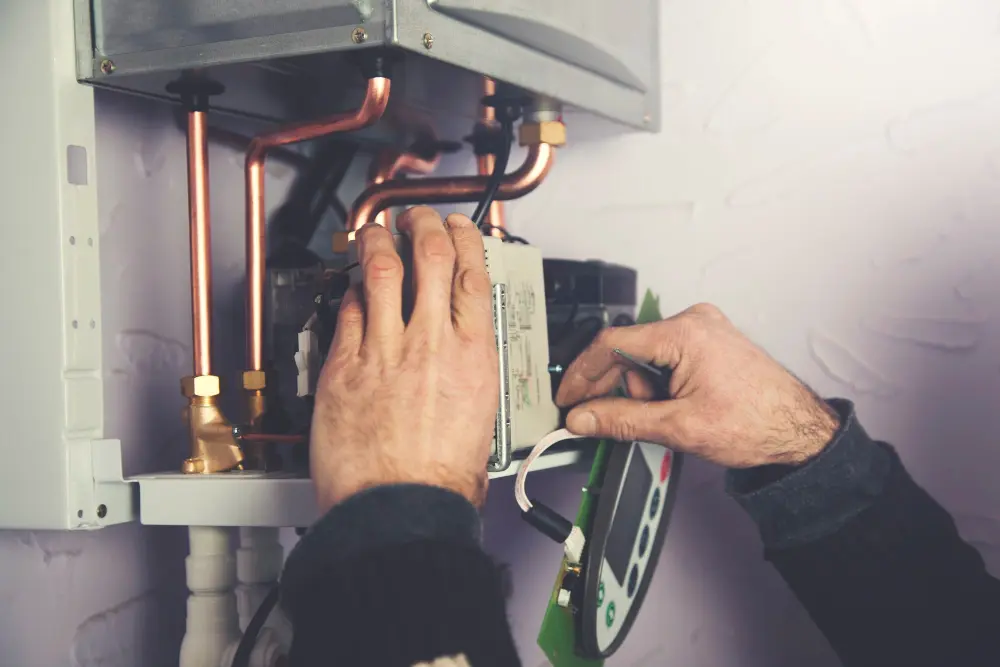
Occasional faults can often be repaired. However, repeated lockouts can indicate that an appliance is becoming unreliable, particularly when it is older or has already needed several repairs.
For homeowners researching the cost for new boiler installation, the important point is that the final figure depends on much more than the boiler itself. The condition of the existing system, installation requirements and type of replacement can all affect the overall price.
If your boiler keeps cutting out, JA Plumbing & Heating can assess the cause and help you understand whether repair remains sensible or whether replacement is worth considering.
Why does a boiler keep cutting out?
A boiler may shut itself down when its controls detect a condition that prevents normal operation.
Possible causes include:
- Low system pressure
- Ignition problems
- Faulty sensors
- Poor water circulation
- Overheating
- Blocked components
- Gas supply issues
- Flue-related problems
- Electrical or control faults
The boiler’s display may show an error code, although not every fault is immediately obvious to the homeowner.
Repeatedly resetting the boiler without investigating the cause is not a long-term solution. If the problem continues, the appliance should be professionally assessed.
A single component fault does not automatically mean that the boiler needs replacing. The age, condition and repair history are also important.
When does repeated cutting out become a replacement concern?
The frequency of breakdowns is one of the most useful things to track.
A relatively modern boiler that has experienced one isolated fault may simply need a repair. An older boiler that has started cutting out every few weeks and has already needed several components replaced presents a different financial decision.
Consider the wider pattern:
| Warning sign | What it may suggest |
| One isolated breakdown | Repair may be appropriate |
| Occasional fault | Monitor and investigate |
| Repeated lockouts | Reliability may be declining |
| Several component failures | Appliance may be ageing |
| Rising repair bills | Replacement may become more economical |
| Poor heating and hot water | Wider performance problems |
| Difficult-to-source parts | Future repairs may become harder |
The decision should not be based on age alone. However, an ageing appliance with multiple recurring faults deserves a proper replacement assessment.
What affects the cost of a new boiler installation?
The cost for new boiler installation can vary because every property has different requirements.
Factors include:
- Boiler type
- Boiler output
- Appliance model
- Existing boiler location
- Pipework condition
- Flue arrangements
- Heating controls
- System configuration
- Access to the installation area
- Additional components
- Complexity of the work
A straightforward replacement in the same location may involve less work than moving a boiler or changing the heating system arrangement.
Homeowners should therefore ask for a complete quotation rather than relying on an advertised boiler price.
Does the type of replacement boiler matter?
Yes.
A combi boiler may be suitable for households that want heating and hot water from one compact appliance. A system boiler with a hot water cylinder may be better suited to homes with higher hot water demand.
The correct choice depends on the property and household.
An installer may consider:
Household size: More occupants can mean greater hot water demand.
Bathrooms: Multiple bathrooms may influence the type of system required.
Available space: A cylinder requires suitable storage space.
Water pressure: This can affect the performance of a combi boiler.
Existing heating system: The current arrangement may influence installation requirements.
Selecting a replacement based solely on the lowest price can lead to a system that is not well matched to the property.
Can repeated boiler faults increase the overall installation work?
They can.
A boiler that repeatedly cuts out may have a fault confined to the appliance. However, investigation can sometimes reveal problems elsewhere in the system.
For example, the installer may identify poor circulation, unsuitable controls, old valves or sections of pipework that require attention.
This does not mean every replacement requires extensive additional work. It simply means the existing system should be assessed before the new appliance is selected.
A properly planned installation should aim to provide a dependable heating system rather than simply replacing the component that has failed most recently.
If your boiler has started cutting out regularly, JA Plumbing & Heating can assess the appliance and wider system before you commit to replacement.
How much should you budget beyond the boiler itself?
The cost of new gas boiler installation may include several separate elements.
A detailed quotation could cover:
| Item | What it involves |
| New boiler | Selected according to property requirements |
| Labour | Removal and installation |
| Materials | Pipework, fittings and associated components |
| Controls | Thermostat and heating controls |
| Flue | Safe connection and required alterations |
| Removal | Taking away the old appliance |
| Commissioning | Testing and setting up the new boiler |
| Additional work | Any necessary system improvements |
When comparing quotations, check that these areas are clearly explained.
A quotation that appears cheaper may exclude work that another installer has already included.
The objective should be to understand the complete project cost rather than finding the smallest headline figure.
Is it cheaper to repair a boiler that keeps cutting out?
Sometimes.
If the fault is straightforward and the appliance is otherwise in good condition, repair may be the most sensible option.
Replacement becomes more attractive when repairs are becoming frequent, expensive or difficult to justify against the remaining useful life of the boiler.
Ask yourself:
- How old is the appliance?
- How often has it broken down?
- How much have recent repairs cost?
- Is its performance declining?
- Are parts still readily available?
- Is the heating system otherwise suitable?
- Would another major repair be likely?
There is no universal financial threshold. A professional assessment can help compare the likely repair route with the benefits of a replacement.
What should a replacement quotation include?
A clear quotation should explain exactly what is being proposed.
Look for:
- Exact boiler make and model
- Boiler output
- Installation location
- Removal of the existing appliance
- Flue arrangements
- Controls included
- Pipework alterations
- Additional components
- Commissioning and testing
- Warranty information
- Any exclusions
Ask questions if anything is unclear.
A detailed quotation makes it easier to compare installers and reduces the risk of unexpected costs later.
A typical replacement scenario
Imagine a homeowner with an older boiler that has started cutting out several times a month.
At first, the fault appears to be related to a single component. The component is repaired and the boiler works again. A few months later, another fault occurs. The boiler begins making unusual noises and the homeowner also notices that hot water performance has become inconsistent.
At this point, continuing with individual repairs may no longer provide the same value as it did previously.
An engineer assesses the boiler and confirms that the appliance is ageing, while the rest of the heating system is suitable for a modern replacement.
In this situation, replacement could offer a more dependable long-term solution than continuing to repair an increasingly unreliable appliance.
Let’s get started, Which fuel powers your boiler?
It just takes 60 Sec
And then you can book a free consultation
How can homeowners avoid making a rushed replacement decision?
The best time to consider replacement is often before a complete breakdown.
If your boiler has begun cutting out repeatedly, start recording the faults and arrange an assessment. This gives you an opportunity to understand the problem and compare options while the heating system is still partially operational.
It can also help to:
- Keep records of repairs
- Note error codes
- Record pressure changes
- Pay attention to new noises
- Check whether hot water problems are increasing
- Request a detailed quotation
- Compare the scope of work, not just the price
Planning ahead can make a replacement decision considerably less stressful.
If recurring boiler breakdowns are becoming difficult to manage, speak to JA Plumbing & Heating. Our team can assess your current system and explain whether repair or replacement is likely to provide the better long-term option.
Final Thoughts
A boiler that repeatedly cuts out is worth taking seriously, particularly when other problems are developing at the same time. Although a single fault may be repairable, recurring breakdowns can indicate that an ageing appliance is becoming increasingly difficult and expensive to maintain.
For homeowners considering the cost for new boiler installation, the best approach is to assess the complete heating system and obtain a detailed quotation based on the property’s actual requirements.
JA Plumbing & Heating can help you understand the condition of your existing boiler and the options available. Whether repair remains practical or replacement makes more sense, clear professional advice can help you make the decision with confidence.
Related articles
Let’s get started, Which fuel powers your boiler?
At a glance
Occasional faults can often be repaired. However, repeated lockouts can indicate that an appliance is becoming unreliable, particularly when it is older or has already needed several repairs.
For homeowners researching the cost for new boiler installation, the important point is that the final figure depends on much more than the boiler itself. The condition of the existing system, installation requirements and type of replacement can all affect the overall price.
If your boiler keeps cutting out, JA Plumbing & Heating can assess the cause and help you understand whether repair remains sensible or whether replacement is worth considering.
Why does a boiler keep cutting out?
A boiler may shut itself down when its controls detect a condition that prevents normal operation.
Possible causes include:
- Low system pressure
- Ignition problems
- Faulty sensors
- Poor water circulation
- Overheating
- Blocked components
- Gas supply issues
- Flue-related problems
- Electrical or control faults
The boiler’s display may show an error code, although not every fault is immediately obvious to the homeowner.
Repeatedly resetting the boiler without investigating the cause is not a long-term solution. If the problem continues, the appliance should be professionally assessed.
A single component fault does not automatically mean that the boiler needs replacing. The age, condition and repair history are also important.
When does repeated cutting out become a replacement concern?
The frequency of breakdowns is one of the most useful things to track.
A relatively modern boiler that has experienced one isolated fault may simply need a repair. An older boiler that has started cutting out every few weeks and has already needed several components replaced presents a different financial decision.
Consider the wider pattern:
| Warning sign | What it may suggest |
| One isolated breakdown | Repair may be appropriate |
| Occasional fault | Monitor and investigate |
| Repeated lockouts | Reliability may be declining |
| Several component failures | Appliance may be ageing |
| Rising repair bills | Replacement may become more economical |
| Poor heating and hot water | Wider performance problems |
| Difficult-to-source parts | Future repairs may become harder |
The decision should not be based on age alone. However, an ageing appliance with multiple recurring faults deserves a proper replacement assessment.
What affects the cost of a new boiler installation?
The cost for new boiler installation can vary because every property has different requirements.
Factors include:
- Boiler type
- Boiler output
- Appliance model
- Existing boiler location
- Pipework condition
- Flue arrangements
- Heating controls
- System configuration
- Access to the installation area
- Additional components
- Complexity of the work
A straightforward replacement in the same location may involve less work than moving a boiler or changing the heating system arrangement.
Homeowners should therefore ask for a complete quotation rather than relying on an advertised boiler price.
Does the type of replacement boiler matter?
Yes.
A combi boiler may be suitable for households that want heating and hot water from one compact appliance. A system boiler with a hot water cylinder may be better suited to homes with higher hot water demand.
The correct choice depends on the property and household.
An installer may consider:
Household size: More occupants can mean greater hot water demand.
Bathrooms: Multiple bathrooms may influence the type of system required.
Available space: A cylinder requires suitable storage space.
Water pressure: This can affect the performance of a combi boiler.
Existing heating system: The current arrangement may influence installation requirements.
Selecting a replacement based solely on the lowest price can lead to a system that is not well matched to the property.
Can repeated boiler faults increase the overall installation work?
They can.
A boiler that repeatedly cuts out may have a fault confined to the appliance. However, investigation can sometimes reveal problems elsewhere in the system.
For example, the installer may identify poor circulation, unsuitable controls, old valves or sections of pipework that require attention.
This does not mean every replacement requires extensive additional work. It simply means the existing system should be assessed before the new appliance is selected.
A properly planned installation should aim to provide a dependable heating system rather than simply replacing the component that has failed most recently.
If your boiler has started cutting out regularly, JA Plumbing & Heating can assess the appliance and wider system before you commit to replacement.
How much should you budget beyond the boiler itself?
The cost of new gas boiler installation may include several separate elements.
A detailed quotation could cover:
| Item | What it involves |
| New boiler | Selected according to property requirements |
| Labour | Removal and installation |
| Materials | Pipework, fittings and associated components |
| Controls | Thermostat and heating controls |
| Flue | Safe connection and required alterations |
| Removal | Taking away the old appliance |
| Commissioning | Testing and setting up the new boiler |
| Additional work | Any necessary system improvements |
When comparing quotations, check that these areas are clearly explained.
A quotation that appears cheaper may exclude work that another installer has already included.
The objective should be to understand the complete project cost rather than finding the smallest headline figure.
Is it cheaper to repair a boiler that keeps cutting out?
Sometimes.
If the fault is straightforward and the appliance is otherwise in good condition, repair may be the most sensible option.
Replacement becomes more attractive when repairs are becoming frequent, expensive or difficult to justify against the remaining useful life of the boiler.
Ask yourself:
- How old is the appliance?
- How often has it broken down?
- How much have recent repairs cost?
- Is its performance declining?
- Are parts still readily available?
- Is the heating system otherwise suitable?
- Would another major repair be likely?
There is no universal financial threshold. A professional assessment can help compare the likely repair route with the benefits of a replacement.
What should a replacement quotation include?
A clear quotation should explain exactly what is being proposed.
Look for:
- Exact boiler make and model
- Boiler output
- Installation location
- Removal of the existing appliance
- Flue arrangements
- Controls included
- Pipework alterations
- Additional components
- Commissioning and testing
- Warranty information
- Any exclusions
Ask questions if anything is unclear.
A detailed quotation makes it easier to compare installers and reduces the risk of unexpected costs later.
A typical replacement scenario
Imagine a homeowner with an older boiler that has started cutting out several times a month.
At first, the fault appears to be related to a single component. The component is repaired and the boiler works again. A few months later, another fault occurs. The boiler begins making unusual noises and the homeowner also notices that hot water performance has become inconsistent.
At this point, continuing with individual repairs may no longer provide the same value as it did previously.
An engineer assesses the boiler and confirms that the appliance is ageing, while the rest of the heating system is suitable for a modern replacement.
In this situation, replacement could offer a more dependable long-term solution than continuing to repair an increasingly unreliable appliance.
Let’s get started, Which fuel powers your boiler?
It just takes 60 Sec
And then you can book a free consultation
How can homeowners avoid making a rushed replacement decision?
The best time to consider replacement is often before a complete breakdown.
If your boiler has begun cutting out repeatedly, start recording the faults and arrange an assessment. This gives you an opportunity to understand the problem and compare options while the heating system is still partially operational.
It can also help to:
- Keep records of repairs
- Note error codes
- Record pressure changes
- Pay attention to new noises
- Check whether hot water problems are increasing
- Request a detailed quotation
- Compare the scope of work, not just the price
Planning ahead can make a replacement decision considerably less stressful.
If recurring boiler breakdowns are becoming difficult to manage, speak to JA Plumbing & Heating. Our team can assess your current system and explain whether repair or replacement is likely to provide the better long-term option.
Final Thoughts
A boiler that repeatedly cuts out is worth taking seriously, particularly when other problems are developing at the same time. Although a single fault may be repairable, recurring breakdowns can indicate that an ageing appliance is becoming increasingly difficult and expensive to maintain.
For homeowners considering the cost for new boiler installation, the best approach is to assess the complete heating system and obtain a detailed quotation based on the property’s actual requirements.
JA Plumbing & Heating can help you understand the condition of your existing boiler and the options available. Whether repair remains practical or replacement makes more sense, clear professional advice can help you make the decision with confidence.