
Cost for Boiler Installation: Which Property Details Can Add Work to the Job?
Discover how property layout, pipework, boiler location and installation requirements can affect your overall boiler installation costs.

Why you can trust our content
We understand that the boiler industry can be confusing, with plenty of outdated or misleading information. That’s why we rely only on trusted, proven sources to guide our advice and installations:


At a glance
When homeowners start researching a new boiler, it is natural to look at the price of the appliance first. However, the boiler itself is only one part of the installation. The property where it is being fitted can have a significant influence on the amount of work involved.
The cost for boiler installation can therefore vary between two homes even when the same boiler model is being considered. Differences in location, access, pipework, flue arrangements and controls can all affect the installation process.
Understanding these property-specific factors before requesting a quotation can help you compare prices more accurately and avoid assuming that an advertised starting price represents the complete project.
Which property details can affect boiler installation work?
The condition and layout of the existing heating installation are important starting points.
An installer may need to assess:
- Where the existing boiler is located
- Where the replacement boiler will be positioned
- How easily the area can be accessed
- The existing flue route
- Gas and heating pipework
- Condensate drainage
- Heating controls
- Available space around the appliance
- The route for removing the old boiler and bringing in materials
Some homes require very little alteration, while others need several parts of the installation adapted.
If you are planning a replacement, a home assessment can identify these requirements before you commit to an installation price.
Can the boiler location increase the amount of work?
Yes. The boiler location can affect both access and the amount of pipework or other installation work required.
For example, a straightforward replacement in the existing position may involve relatively limited changes. Moving the boiler to another part of the property can require additional pipework, a different flue route and changes to controls or condensate drainage.
Location also needs to be considered from a maintenance perspective. The boiler should remain reasonably accessible for future servicing and repairs.
When discussing a new installation, ask:
- Is the current location suitable?
- Would relocation provide a practical benefit?
- What additional work would relocation involve?
- Will the new position allow appropriate access for servicing?
A change in position should be considered as part of the overall project rather than simply as a boiler-location preference.
How can the flue route affect the installation?
The flue connects the boiler to the outside and needs to be installed in accordance with the requirements for the appliance and property.
The existing flue route may be suitable for a replacement, but this should be confirmed rather than assumed.
The installer may need to consider:
- Where the flue exits the property
- The route between the boiler and external wall
- Whether the existing arrangement can be retained
- Whether the replacement requires different components
- Access for installation
- The position of the terminal outside
If the boiler is being relocated, the flue requirements may become more involved.
This is one reason the cost of new gas boiler installation should not be estimated from the appliance price alone.
Let’s get started, Which fuel powers your boiler?
It just takes 60 Sec
And then you can book a free consultation
Could existing pipework add to the work?
Pipework is another property-specific consideration.
Older heating systems can have different pipe arrangements from newer installations, and some existing connections may require modification. The installer should assess the accessible pipework and determine what can reasonably be retained.
Potential work may include:
- Altering connections to the new boiler
- Repositioning sections of pipework
- Replacing unsuitable or damaged sections
- Adjusting the condensate route
- Improving access around the appliance
Not every installation will require these changes. The important point is that the existing pipework should be assessed before the final quotation is agreed.
Does access to the property matter?
Access is easy to overlook when thinking about boiler installation, but it can influence how materials and the old appliance are moved.
Consider whether the installer can easily reach:
- The front or rear entrance
- The boiler location
- Cupboards or utility areas
- Stairs and narrow corridors
- External areas needed for installation work
A boiler located upstairs, inside a restricted cupboard or at the end of a difficult route may require more preparation than one in an easily accessible utility room.
Homeowners can help by clearing stored items and keeping the route to the working area unobstructed.
Can the boiler cupboard affect the job?
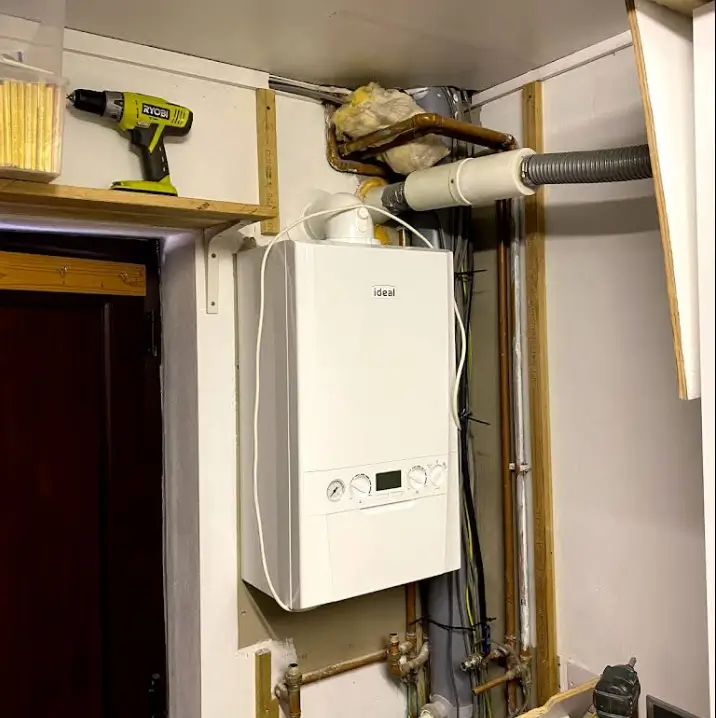
A boiler installed inside a cupboard creates another set of practical considerations.
The installer may need to check:
- Internal dimensions
- Appliance clearances
- Access to controls
- Servicing access
- Flue positioning
- Pipework space
- Whether shelving or doors interfere with the installation
A replacement boiler may have different dimensions from the old appliance. Even if the new unit appears similar, its installation requirements should be checked before assuming that it will fit without alterations.
If your boiler is concealed in a cupboard, mention this when arranging a survey so the installer can assess the available space and access properly.
What about controls and heating system connections?
Controls can form part of the installation work too.
If the existing controls are outdated, damaged or unsuitable for the planned system, replacement may be recommended. The location of thermostats and other controls can also affect the practical installation.
A quotation should make clear whether controls are:
- Included as standard
- Being retained
- Being replaced
- An optional upgrade
- Excluded from the quoted price
This prevents a common source of confusion when comparing quotations.
The same principle applies to other connections. If a homeowner knows exactly what is included, it becomes easier to understand why two installation prices may differ.
Could condensate drainage add work?
Modern condensing boilers produce condensate that needs an appropriate drainage arrangement.
The existing condensate route may be reusable, but its condition, routing and connection should be assessed.
If the boiler is moved, the condensate route may also need to change. This can involve additional materials or labour depending on the property.
It is therefore sensible to ask the installer whether the existing condensate arrangement can be retained and whether any alterations have been included in the quotation.
How does property condition affect the final price?
The condition of the area around the existing boiler can also influence the work involved.
For example, an installer may encounter:
- Damaged pipework
- Old fittings
- Restricted access
- Deteriorated surfaces
- Difficult-to-reach connections
- Previous alterations that do not suit the new installation
Some issues will be visible during a survey, while others may only become apparent once work begins.
A good quotation should distinguish between known requirements and work that could only be confirmed after removal or further investigation.
What should a boiler installation quotation include?
When comparing the cost for boiler installation, look beyond the headline figure.
A useful quotation should make it reasonably clear what the price covers.
| Property or installation factor | What to look for in the quotation |
| Boiler | Make, model and output |
| Labour | Installation work included |
| Flue | Components and installation |
| Pipework | Alterations or replacement included |
| Controls | Existing or new controls specified |
| Condensate | Drainage arrangement explained |
| Old boiler | Removal and disposal |
| Access work | Any known additional requirements |
| Additional work | Clear explanation of exclusions |
A lower quotation is not necessarily directly comparable if it excludes items that another installer has already included.
Can a survey make the installation price more predictable?
A survey cannot guarantee that every unforeseen issue will be eliminated, but it can reveal many of the property-specific requirements before work starts.
This is particularly valuable when a boiler is being relocated, or the existing installation is older.
During the assessment, homeowners should ask the installer to explain:
- What will stay
- What will change
- What needs replacing
- What is included in the price
- What could potentially require additional work
This gives you a clearer basis for planning the project.
Before arranging your new boiler installation in Oxford, ask JA Plumbing And Heating Solutions Ltd to assess the property and explain the work that may be required.
Need a Clear Boiler Installation Quote in Oxford? Get in Touch Today
The cost for boiler installation is influenced by far more than the price of the boiler itself. Property layout, boiler location, access, flue arrangements, pipework, controls and condensate drainage can all affect the amount of work required.
That does not mean every property will need additional work. A straightforward replacement may require relatively few alterations, while a more complex installation may involve several changes.
The most reliable way to understand the likely cost of new gas boiler installation is to have the property assessed and obtain a clear quotation that explains what is included.
JA Plumbing And Heating Solutions Ltd can help homeowners understand the practical requirements of their installation before work begins, giving them a clearer picture of the project and the costs involved.
Related articles


Let’s get started, Which fuel powers your boiler?
At a glance
When homeowners start researching a new boiler, it is natural to look at the price of the appliance first. However, the boiler itself is only one part of the installation. The property where it is being fitted can have a significant influence on the amount of work involved.
The cost for boiler installation can therefore vary between two homes even when the same boiler model is being considered. Differences in location, access, pipework, flue arrangements and controls can all affect the installation process.
Understanding these property-specific factors before requesting a quotation can help you compare prices more accurately and avoid assuming that an advertised starting price represents the complete project.
Which property details can affect boiler installation work?
The condition and layout of the existing heating installation are important starting points.
An installer may need to assess:
- Where the existing boiler is located
- Where the replacement boiler will be positioned
- How easily the area can be accessed
- The existing flue route
- Gas and heating pipework
- Condensate drainage
- Heating controls
- Available space around the appliance
- The route for removing the old boiler and bringing in materials
Some homes require very little alteration, while others need several parts of the installation adapted.
If you are planning a replacement, a home assessment can identify these requirements before you commit to an installation price.
Can the boiler location increase the amount of work?
Yes. The boiler location can affect both access and the amount of pipework or other installation work required.
For example, a straightforward replacement in the existing position may involve relatively limited changes. Moving the boiler to another part of the property can require additional pipework, a different flue route and changes to controls or condensate drainage.
Location also needs to be considered from a maintenance perspective. The boiler should remain reasonably accessible for future servicing and repairs.
When discussing a new installation, ask:
- Is the current location suitable?
- Would relocation provide a practical benefit?
- What additional work would relocation involve?
- Will the new position allow appropriate access for servicing?
A change in position should be considered as part of the overall project rather than simply as a boiler-location preference.
How can the flue route affect the installation?
The flue connects the boiler to the outside and needs to be installed in accordance with the requirements for the appliance and property.
The existing flue route may be suitable for a replacement, but this should be confirmed rather than assumed.
The installer may need to consider:
- Where the flue exits the property
- The route between the boiler and external wall
- Whether the existing arrangement can be retained
- Whether the replacement requires different components
- Access for installation
- The position of the terminal outside
If the boiler is being relocated, the flue requirements may become more involved.
This is one reason the cost of new gas boiler installation should not be estimated from the appliance price alone.
Let’s get started, Which fuel powers your boiler?
It just takes 60 Sec
And then you can book a free consultation
Could existing pipework add to the work?
Pipework is another property-specific consideration.
Older heating systems can have different pipe arrangements from newer installations, and some existing connections may require modification. The installer should assess the accessible pipework and determine what can reasonably be retained.
Potential work may include:
- Altering connections to the new boiler
- Repositioning sections of pipework
- Replacing unsuitable or damaged sections
- Adjusting the condensate route
- Improving access around the appliance
Not every installation will require these changes. The important point is that the existing pipework should be assessed before the final quotation is agreed.
Does access to the property matter?
Access is easy to overlook when thinking about boiler installation, but it can influence how materials and the old appliance are moved.
Consider whether the installer can easily reach:
- The front or rear entrance
- The boiler location
- Cupboards or utility areas
- Stairs and narrow corridors
- External areas needed for installation work
A boiler located upstairs, inside a restricted cupboard or at the end of a difficult route may require more preparation than one in an easily accessible utility room.
Homeowners can help by clearing stored items and keeping the route to the working area unobstructed.
Can the boiler cupboard affect the job?
A boiler installed inside a cupboard creates another set of practical considerations.
The installer may need to check:
- Internal dimensions
- Appliance clearances
- Access to controls
- Servicing access
- Flue positioning
- Pipework space
- Whether shelving or doors interfere with the installation
A replacement boiler may have different dimensions from the old appliance. Even if the new unit appears similar, its installation requirements should be checked before assuming that it will fit without alterations.
If your boiler is concealed in a cupboard, mention this when arranging a survey so the installer can assess the available space and access properly.
What about controls and heating system connections?
Controls can form part of the installation work too.
If the existing controls are outdated, damaged or unsuitable for the planned system, replacement may be recommended. The location of thermostats and other controls can also affect the practical installation.
A quotation should make clear whether controls are:
- Included as standard
- Being retained
- Being replaced
- An optional upgrade
- Excluded from the quoted price
This prevents a common source of confusion when comparing quotations.
The same principle applies to other connections. If a homeowner knows exactly what is included, it becomes easier to understand why two installation prices may differ.
Could condensate drainage add work?
Modern condensing boilers produce condensate that needs an appropriate drainage arrangement.
The existing condensate route may be reusable, but its condition, routing and connection should be assessed.
If the boiler is moved, the condensate route may also need to change. This can involve additional materials or labour depending on the property.
It is therefore sensible to ask the installer whether the existing condensate arrangement can be retained and whether any alterations have been included in the quotation.
How does property condition affect the final price?
The condition of the area around the existing boiler can also influence the work involved.
For example, an installer may encounter:
- Damaged pipework
- Old fittings
- Restricted access
- Deteriorated surfaces
- Difficult-to-reach connections
- Previous alterations that do not suit the new installation
Some issues will be visible during a survey, while others may only become apparent once work begins.
A good quotation should distinguish between known requirements and work that could only be confirmed after removal or further investigation.
What should a boiler installation quotation include?
When comparing the cost for boiler installation, look beyond the headline figure.
A useful quotation should make it reasonably clear what the price covers.
| Property or installation factor | What to look for in the quotation |
| Boiler | Make, model and output |
| Labour | Installation work included |
| Flue | Components and installation |
| Pipework | Alterations or replacement included |
| Controls | Existing or new controls specified |
| Condensate | Drainage arrangement explained |
| Old boiler | Removal and disposal |
| Access work | Any known additional requirements |
| Additional work | Clear explanation of exclusions |
A lower quotation is not necessarily directly comparable if it excludes items that another installer has already included.
Can a survey make the installation price more predictable?
A survey cannot guarantee that every unforeseen issue will be eliminated, but it can reveal many of the property-specific requirements before work starts.
This is particularly valuable when a boiler is being relocated, or the existing installation is older.
During the assessment, homeowners should ask the installer to explain:
- What will stay
- What will change
- What needs replacing
- What is included in the price
- What could potentially require additional work
This gives you a clearer basis for planning the project.
Before arranging your new boiler installation in Oxford, ask JA Plumbing And Heating Solutions Ltd to assess the property and explain the work that may be required.
Need a Clear Boiler Installation Quote in Oxford? Get in Touch Today
The cost for boiler installation is influenced by far more than the price of the boiler itself. Property layout, boiler location, access, flue arrangements, pipework, controls and condensate drainage can all affect the amount of work required.
That does not mean every property will need additional work. A straightforward replacement may require relatively few alterations, while a more complex installation may involve several changes.
The most reliable way to understand the likely cost of new gas boiler installation is to have the property assessed and obtain a clear quotation that explains what is included.
JA Plumbing And Heating Solutions Ltd can help homeowners understand the practical requirements of their installation before work begins, giving them a clearer picture of the project and the costs involved.